


Last Updated: November 1, 2026
Quick Summary
What makes a cigar award winning comes down to flawless construction, carefully aged tobacco, a balanced flavor profile, and consistent performance across every stick in the box. Judges score unbanded cigars blind on a 100-point scale weighing construction, burn, draw, aroma, and flavor, with 95 or higher labeled classic.
- Blind tastings use unbanded cigars so brand reputation cannot influence the score.
- Judges score appearance and construction, draw and burn, flavor and aroma, and finish.
- Awards are annual rankings against all releases, so weigh them more heavily than single ratings.
- A plugged draw or canoeing burn can drop a cigar ten points before flavor is assessed.
Table of Contents
- What Makes a Cigar Award Winning?
- How Cigars Are Rated: Inside the 100-Point System
- Cigar Construction and Quality: The Foundation Every Judge Checks
- Tobacco Origin, Aging, and Blending Technique
- Cigar Flavor Profile: What Separates Good From Award Winning
- How to Choose a Cigar That Has Earned Recognition
- What an Award Doesn't Tell You
- Shop Padilla's Award-Winning Cigars
- Frequently Asked Questions
What Makes a Cigar Award Winning?
Award-winning cigars share a specific set of measurable traits: flawless construction, carefully aged tobacco, a balanced flavor profile, and consistent performance across every stick in the box. Over the years, the gap between a 90-point cigar and a 96-point one has rarely come down to hype. It comes down to how the leaf is grown, fermented, rolled, and judged under blind conditions by panels who never see the band. Below, we break down exactly what makes a cigar award winning, from the 100-point scoring system to the construction details that decide a score before the first puff. Padilla has been recognized among Cigar Aficionado's Top 25 cigars and among the Top cigars in the world, as noted below.
How Cigars Are Rated: Inside the 100-Point System
Cigars are rated on a 100-point scale that weighs construction, burn, draw, aroma, and flavor, with points deducted for defects and added for complexity and balance. Most publications treat 90 and above as excellent, while Cigar Aficionado's rating guide labels anything at 95 or higher as "classic." That threshold matters: a 94 and a 96 can smoke similarly to an untrained palate, but only one earns the top tier.
Blind Tastings and the Categories Judges Score
Blind tasting is the backbone of credible ratings. Judges receive unbanded cigars, so brand reputation cannot influence the score. Panels typically evaluate four categories:
- Appearance and construction: wrapper uniformity, cap integrity, firmness without soft spots
- Draw and burn: resistance on the cold draw, ash consistency, whether the burn line stays even
- Flavor and aroma: complexity, balance, and how the profile develops across thirds
- Finish: how long the flavor lingers and whether it turns harsh
Scores are averaged across multiple reviewers, which smooths out individual bias. A single judge's 97 means little. A panel's consensus 95 is a signal.
Ratings Versus Awards: What the Difference Means for Buyers
A rating is a number attached to one vitola from one production run. An award is a ranking, usually annual, that places a cigar against everything else released that year. A 95-point score tells you a cigar performed well in a tasting. A Top 25 placement tells you it beat out hundreds of competitors in the same cycle. Buyers should weight awards more heavily when comparing across brands, because the competitive field is wider.
Here is how the 100-point scale and the categories judges score break down.
| Item | Value | Note |
|---|---|---|
| Rating scale | 100 points | Weighs construction, burn, draw, aroma, flavor |
| Excellent threshold | 90 and above | Most publications |
| Classic threshold | 95 or higher | Cigar Aficionado's rating guide |
| Appearance and construction | Wrapper uniformity, cap integrity, firmness | Scored category |
| Draw and burn | Cold draw resistance, ash consistency, even burn line | Scored category |
| Flavor and aroma | Complexity, balance, development across thirds | Scored category |
| Finish | How long flavor lingers, whether it turns harsh | Scored category |
Cigar Construction and Quality: The Foundation Every Judge Checks
Construction is the first thing a judge scores and the easiest place for a premium cigar to fail. A plugged draw or a canoeing burn can drag a beautifully blended cigar down ten points before the flavor is even assessed. Every award-winning cigar starts with an intact cap, an even pack from foot to head, and a wrapper with no tears, veins, or soft spots. If you want to learn to spot those defects yourself, our guide on how to spot high-quality tobacco construction walks through what to look for in the hand.
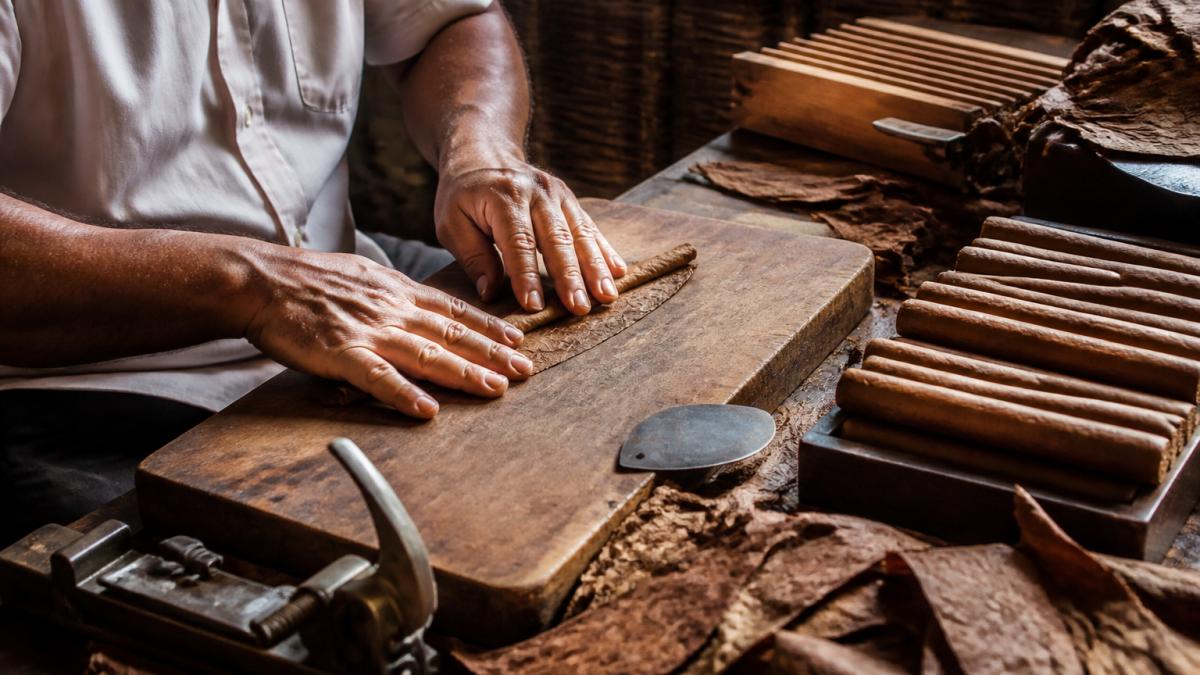
The details judges watch for are specific:
- Cap: a clean triple cap that holds together when cut
- Pack: uniform firmness, with no soft middle third
- Wrapper: tight seams, minimal veining, even color
- Foot: an open draw on the cold pull, never tight or loose
A common mistake among newer smokers is blaming the blend when a cigar tunnels or goes out. Nine times out of ten, the problem is construction or storage, not the tobacco.
Tobacco Origin, Aging, and Blending Technique
Origin, aging, and blending decide what a cigar tastes like, and awards follow flavor. Nicaraguan leaf from Estelí tends toward pepper and earth; Jalapa grows a softer, sweeter leaf. A blender's job is to combine primings so no single note dominates. Aging matters just as much: fermented tobacco rests for months or years so ammonia and harshness dissipate before rolling. Our breakdown of what makes handcrafted cigars better explains why the rolling method and leaf selection compound over time.
Blending technique is where most competition is won. A great blender builds a cigar that opens clean, develops through the middle, and finishes without turning bitter. That arc, more than any single flavor note, is what separates an award winner from a good daily smoke.
Cigar Flavor Profile: What Separates Good From Award Winning
A good cigar tastes pleasant. An award-winning cigar changes on you, and does it deliberately. Judges reward complexity, balance, and a clean progression across the thirds. A cigar that opens on cocoa and espresso, shifts to dried fruit and cedar, and lands on leather and earth is doing work that a one-note stick cannot match.
Balance is the harder test. Strength without flavor scores poorly; flavor without structure turns muddy. The best blends hold medium-full body while keeping the finish clean. If a cigar turns harsh in the final third, that is a construction and fermentation problem showing up as a flavor problem.
How to Choose a Cigar That Has Earned Recognition
Choosing a recognized cigar comes down to matching award pedigree to your own palate and budget, not chasing the highest number on the shelf. Start with cigars that have a documented track record, then narrow by strength and wrapper.
- Confirm the cigar has a published rating or award from a recognized publication
- Match strength to your experience: medium for newer smokers, full for regulars
- Check the wrapper type against flavors you already like
- Buy a single or five-pack before committing to a box
- Verify the retailer's storage and shipping practices
A 96-point cigar you dislike is still a bad purchase for you. Use ratings to build a shortlist, then let your own palate decide.
What an Award Doesn't Tell You
An award is a snapshot, not a guarantee. Rutgers researchers note that premium cigar use is rising and that more research is needed to understand use patterns and possible health effects, a reminder that ratings measure smoking experience, not health outcomes. A 2024 study by O. Ganz and coauthors in Tobacco Prevention & Cessation also found that premium-cigar marketing tends to highlight favorable themes like glamour, which is worth keeping in mind when award coverage reads like promotion.
Award judging also varies by publication. Some use a 100-point scale; others publish category-specific eligibility rules. And a high score on one vitola does not automatically transfer to every size in the line. If you are weighing whether a recognized cigar justifies its price, our piece on what makes premium cigars worth it covers the value question directly.
Shop Padilla's Award-Winning Cigars
Padilla's record includes five selections among Cigar Aficionado's Top cigars in the world, including a Top 25 placement in 2021.
Two releases worth starting with:
- Padilla Miami 8&11, $185.00, twice selected among the Top 25 Cigars in the world by Cigar Aficionado. Rolled in Little Havana at El Titan de Bronze with a Corojo Ecuador wrapper and Aganorsa-grown Nicaraguan fillers from Estelí and Jalapa.
- Padilla Vintage Reserve 3.0 Pre-Release 5-Pack, $49.95, a small-batch maduro built on aged Estelí and Jalapa long-filler with notes of dark cocoa, roasted espresso, and charred oak.
Free shipping applies to U.S. orders over $100.


Frequently Asked Questions
What makes a cigar award-winning?
An award-winning cigar scores highly across construction, draw, burn, aroma, and flavor in a structured judging process. Publications like Cigar Aficionado use a 100-point scale and label anything at 95 or above as classic. Judges look for an even burn, a clean draw, and a flavor profile that develops rather than flattens. A high score reflects one panel's blind assessment of one sample, not a guarantee that every box will taste the same to you.
How important is cigar construction and quality to a rating?
Construction decides whether a judge ever tastes the blend as intended. A cigar with a tight draw, uneven burn, or a wrapper that splits will lose points no matter how good the tobacco is. Judges check the cap, the seams, the firmness of the roll, and how the ash holds. Padilla's Miami 8&11, twice named among Cigar Aficionado's Top 25 Cigars in the World, is made in Little Havana, U.S.A. at El Titan de Bronze Cigar Factory.
Does an award guarantee a cigar will taste good to me?
No. Awards measure a panel's blind response to a specific sample against a shared scoring rubric. Your palate may run milder or stronger than the judges'. Use awards as a shortlist, then match the cigar flavor profile to what you already smoke. If you favor cocoa and espresso, the Padilla Vintage Reserve 3.0 pre-release 5-pack ($49.95), with notes of dark cocoa and roasted espresso beans, is one option to consider.
How do I choose an award-winning cigar without wasting money?
Start with a five-pack rather than a full box so you can judge freshness and construction for yourself. Check who rated it and on what scale, then confirm the blend matches your preferred strength. Padilla's Signature 1932 Broadleaf Lote 32-6 5-pack ($59.75) is a sound starting point: this small-batch run wraps the 1932 blend in Connecticut Broadleaf for a darker, medium-full smoke.
The difference between a cigar that wins awards and one that just smokes fine is rarely mysterious: it is construction you can inspect, tobacco that was aged long enough, and a blend that holds its balance to the last inch. Padilla Cigar Company has built 21 years of award-winning, direct-from-the-factory cigars on exactly that standard, with free shipping on U.S. orders over $100. Browse the Miami 8&11 and the Vintage Reserve 3.0 pre-release, and taste what the judges scored for yourself.

Several Padilla blends have earned Cigar Aficionado Top 25 honors, including the Miami 8&11 and the 88 Aniversario.