


Last Updated: November 13, 2026
Quick Summary
To cut a premium cigar, use a sharp double-blade guillotine cutter and slice just above the shoulder, about one-sixteenth of an inch into the cap, in one quick, firm motion. Never cut past the shoulder, since slicing into the binder makes the wrapper unravel. Start shallow and take a second thin slice only if the draw stays tight.
- The cap is the small wrapper leaf glued over the head that holds the cigar's structure together.
- A straight cut gives the most open draw, a V-cut concentrates smoke, and a punch suits large ring gauges.
- Punch cuts work best on cigars with a ring gauge of 50 or larger; smaller cigars split.
- Cutting one-eighth of an inch or more usually goes past the cap and into the binder.
- Wipe cutter blades with a soft cloth after each use and store the cutter closed and dry.
Table of Contents
- Why the Cut Decides How a Premium Cigar Smokes
- How to Cut a Cigar for Beginners: Tools and the Cap and Shoulder
- Straight Cut, V-Cut, or Punch: Choosing Your Cut Style
- How to Punch Cut a Cigar Without Splitting the Cap
- How Much of a Cigar Cap to Cut: Depth and Diameter Rules
- How to Cut a Cigar With Scissors or Without a Cutter
- Troubleshooting a Poor Draw, Wrapper Damage, and Cutter Care
- Choosing a Cutter That Fits Your Collection at Padilla
- Frequently Asked Questions
Why the Cut Decides How a Premium Cigar Smokes
A premium cigar is only as good as the path the smoke takes through it.
The cap is the small piece of wrapper leaf glued over the head of the cigar.
Cut it wrong, and you get loose tobacco in your mouth and a wrapper that peels.
The stakes are higher than they look. A hand-rolled cigar carries years of aging and careful blending.
Cigar Aficionado's guide to cigar anatomy explains how the cap, binder, and filler work together.
If you want to understand why construction matters so much, read our breakdown of what makes premium cigars worth it.
How to Cut a Cigar for Beginners: Tools and the Cap and Shoulder
The best way to cut a cigar for beginners is simple: use a sharp double-blade guillotine cutter, find the shoulder, and slice just above it. That's the whole method.
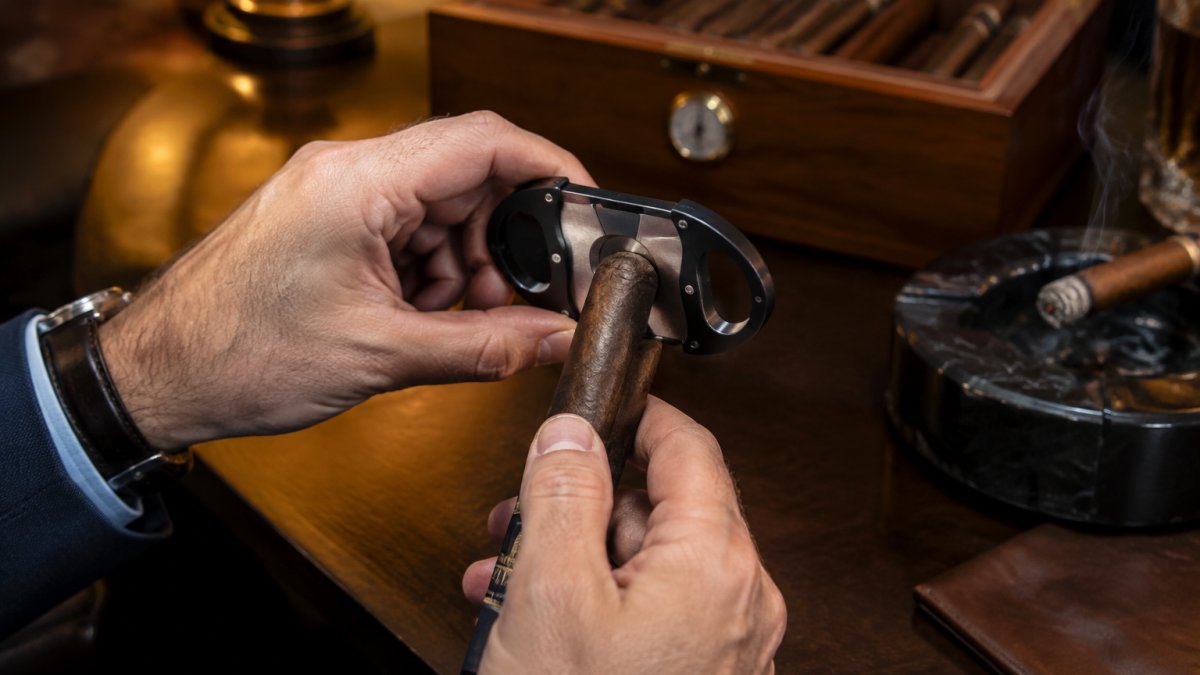
Here's the process step by step:
- Find the cap. It's the rounded end that touches your lips, covered by a small leaf patch.
- Locate the shoulder. This is the ridge where the cap ends and the body of the cigar begins.
- Place the blade. Set the cutter just above the shoulder, about one-sixteenth of an inch into the cap.
- Cut in one motion. Close the blades quickly and firmly. Don't saw or squeeze.
The cap and shoulder decide everything. Cutting below the shoulder slices through binder leaf and the cigar starts to unravel.
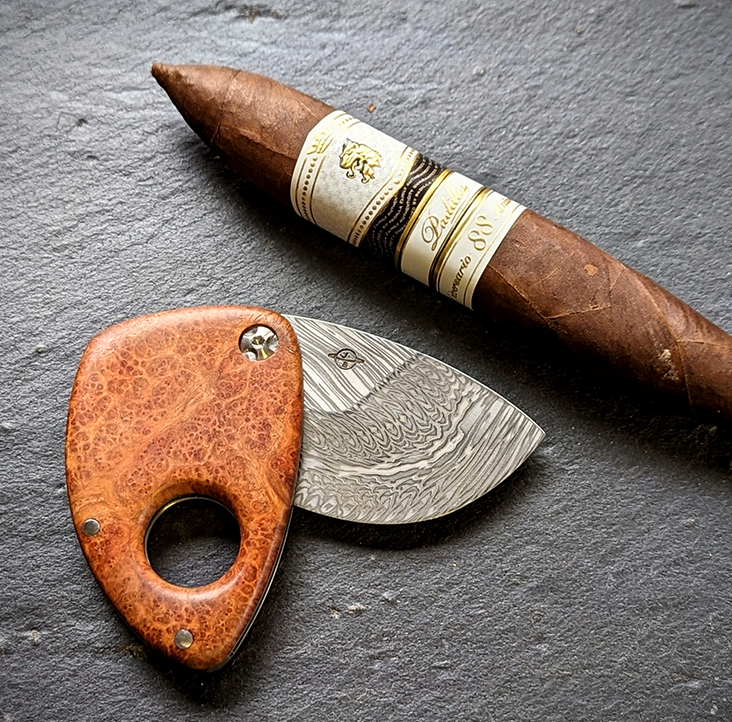
For collectors who want a cutter worth passing down, our custom Damascus steel cigar cutter is made to order, with optional engraving.
Straight Cut, V-Cut, or Punch: Choosing Your Cut Style
No single cut style is universally best. Straight, V-cut, and punch cuts all work, and the right choice depends on your cigar's shape and how you like to smoke.
| Cut Style | Opening Shape | Best For | Draw Feel |
|---|---|---|---|
| Straight (guillotine) | Full circle | Most parejos and figurados | Open, even |
| V-cut (wedge) | Wedge notch | Thick ring gauges, torpedoes | Focused, concentrated |
| Punch (cross cut) | Small circle | Quick smokes, large ring gauges | Tight, controlled |
A straight cut removes the most cap and gives the most open draw. A V-cut's wedge opening concentrates smoke on the palate.
For torpedo and other figurado shapes, the tapered head changes the math. Our guide to the best cigar shapes for an even, comfortable draw covers which shapes suit which cut.
How to Punch Cut a Cigar Without Splitting the Cap
A punch cut works best on cigars with a ring gauge of 50 or larger, where the cap has enough surface to hold a clean circular hole. Smaller cigars split.
How to punch cut a cigar in four steps:
- Press the punch against the center of the cap.
- Twist gently while applying steady pressure.
- Stop when you feel the blade break through the cap leaf.
- Pull straight out. Don't wiggle.
The punch must be sharp. A dull punch crushes the cap instead of slicing it, and a crushed cap splits along the wrapper.
Center placement matters. Off-center punches leave a thin wall of cap on one side that tears when you draw.
How Much of a Cigar Cap to Cut: Depth and Diameter Rules
How much of a cigar cap to cut comes down to two numbers: about one-sixteenth of an inch in depth, or roughly two millimeters. Never cut past the shoulder. That baseline only holds for a parejo, though, the tapered heads on figurados change where the shoulder sits and how much cap you can safely remove.
The baseline rule of thumb:
- Depth: One-sixteenth inch (about 2 mm) removes the cap without touching binder leaf.
- Diameter: Match the cut to the ring gauge. A wider cigar needs a wider opening.
- One cut only: If the draw is tight, cut a second thin slice. Don't cut deep on the first pass.
Cutting one-eighth of an inch or more usually goes past the cap and into the binder, causing frayed edges and loose tobacco. A shallow cut is easy to fix; an overcut is not.
Shape-specific placement. The one-sixteenth rule is a starting point, not a universal law. Adjust it to the head in front of you:
- Parejos (straight-sided): The shoulder is a clear ridge near the head. Set the blade just above it, about one-sixteenth of an inch into the cap.
- Torpedoes and belicosos (tapered heads): The cap wraps a pointed tip, and the shoulder can sit farther back than on a parejo. Cut less than you think, start with a thin slice off the very tip, roughly one-sixteenth of an inch, and test the draw. Cutting too far back removes the tapered structure and can loosen the wrapper.
- Pyramids (gradual taper): Similar to torpedoes but with a longer, gentler taper, so you have more margin. Still cut just above the shoulder and avoid slicing into the body where the ring gauge widens.
- Perfectos and other figurados (tapered at both ends): Treat the head like a torpedo: a shallow tip cut first, then adjust. The closed foot means the head is the only opening, so a clean, centered cut matters more.
- Culebras and other specialty shapes: Cut each head individually with a shallow straight cut, and expect a tighter draw than a parejo of the same ring gauge.
To calibrate: place the cutter, close it slowly until the blades just touch the wrapper, and look at how much cap sits above the blade line.
Watch out: On a torpedo or pyramid, one-sixteenth of an inch measured from the tip is not the same as one-sixteenth measured from the shoulder.
How to Cut a Cigar With Scissors or Without a Cutter
You can cut a cigar with scissors, but the scissors must be sharp, clean, and used with a quick, decisive snip. Dull blades crush the wrapper.
How to cut a cigar with scissors:
- Wipe the blades clean.
- Mark your cut line just above the shoulder with your thumbnail.
- Open the blades wide and position them at the line.
- Snip once, fast and firm.
Without any cutter at all, a few field methods work in a pinch. A sharp pocket knife can score and lift the cap, and some smokers use a punch made from a clean, rigid tube.
None of these match a proper cutter. Keep a good cutter in your case.
Troubleshooting a Poor Draw, Wrapper Damage, and Cutter Care
A poor draw after cutting is a diagnosis problem before it is a fix problem.
Step 1: Test the draw before you cut again. Take a cold draw, pull air through the unlit cigar.
Step 3: Match the fix to the symptom.
- Tight draw from a shallow cut: Recut a thin slice, about one-thirty-second of an inch, and retest. Repeat once if needed. Stop as soon as air moves freely.
- Tight draw from overhumidification: If the cigar feels spongy and the draw is tight despite an open cut, the tobacco is likely overhumidified.
- Plugged cigar: Gently massage the cigar between your fingers along its length to loosen dense filler. A draw poker inserted from the cut end can open a channel, but it risks cracking the wrapper if forced.
- Loose, hot draw from an overcut: You cannot add cap back. Smoke more slowly and cooler to compensate, and expect a warmer, sharper flavor. On future cigars of that shape, cut shallower.
- Wrapper damage at the cap: Larger splits that expose binder mean the cigar is compromised and will burn unevenly.
- Frayed or crushed edge: This is a blade problem, not a technique problem. Sharpen or replace the cutter before your next cigar.
Watch out: Recutting a plugged cigar rarely fixes it and can turn a tight draw into a loose, hot one.
Cutter maintenance and blade sharpness. A cutter is a cutting tool, and it dulls over time. The timeline depends on use and storage. Signs it is time to act:
- Crushing instead of slicing: The wrapper tears or frays at the cut line even with a fast, firm motion.
- Resistance mid-cut: The blades bind or require a second squeeze to finish the cut.
- Visible nicks or rust: Inspect the blade edge under light. Any nick or spot of rust means replace or sharpen.
Cleaning routine: wipe the blades with a soft cloth after each use to remove tobacco oils and leaf fragments.
A poor draw also flattens flavor, so if you're new to tasting, our guide to cigar flavor profiles for beginners explains what you should be picking up once the draw is right.
Choosing a Cutter That Fits Your Collection at Padilla
At Padilla Cigar Company, we've spent 21 years around handcrafted cigars. A good cutter is part of the ritual.
Match the cutter to your collection. If you smoke mostly thick ring gauges, a punch or V-cut serves you well. If you smoke parejos and figurados, a sharp double-blade guillotine covers everything.
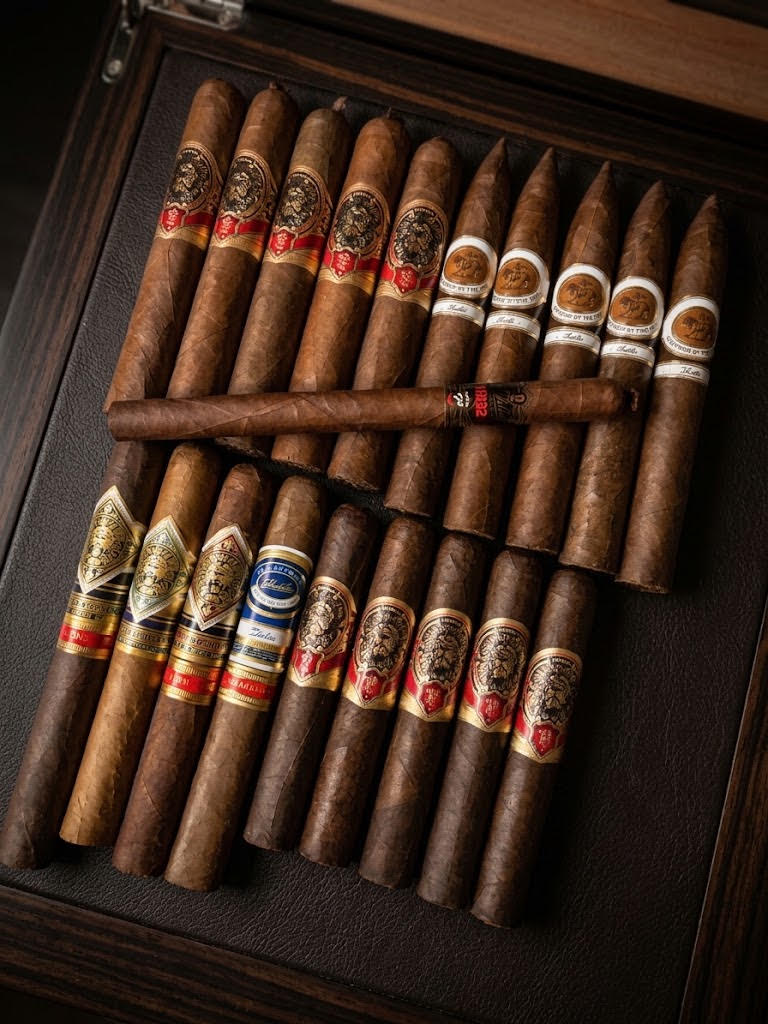
Once you've mastered the cut, a sampler is the best way to practice on premium tobacco. Our 20 Premium Padillas sampler gives you a range of blends to work through.
Free shipping applies on U.S. orders over $100.
Cutting a premium cigar well takes one sharp blade and ten seconds of care. The difference between a smooth draw and a ruined wrapper is a fraction of an inch. Padilla Cigar Company handcrafts award-winning cigars direct from the factory, with 21 years of experience behind every blend, and every box ships ready to smoke. Get started with Padilla Cigar Company and give every cigar the clean cut it deserves.
Frequently Asked Questions
How much of a cigar cap should you cut off?
Remove only a thin slice, about one-sixteenth to one-eighth inch, or roughly two to three millimeters, from the very tip of the cap. The goal is to open the draw without cutting into the shoulder, the curved edge where the cap meets the wrapper. If the draw feels tight after the first cut, take another small slice. Cutting too deep in one pass risks a frayed edge and loose tobacco, so work in small increments until airflow feels right.
Can you cut a cigar with scissors if you do not have a cutter?
Yes, sharp household scissors can work in a pinch, but the cut will not be as clean as a guillotine or punch. Use small, sharp scissors and snip just the tip of the cap in one quick motion, avoiding a sawing action that crushes the wrapper. Clean the blades first, and cut only above the shoulder. A clean cut with scissors is possible, but a dedicated cutter gives more control over depth and blade alignment, especially on a premium cigar.
Does it matter which end of a cigar you cut?
Yes. Cut only the cap end, the end that is rounded and covered by a small leaf of tobacco. The other end, the foot, is where you light the cigar. Cutting the foot would expose filler tobacco and ruin the smoke. On a parejo, the cap is easy to spot because it looks like a small patch glued over the head. On figurados such as a torpedo, the tapered head is the cap end, and you cut only the pointed tip.
What is the difference between a straight cut, punch cut, and V-cut?
A straight cut, also called a guillotine cut, slices off the tip of the cap with one or two blades and gives the most open draw. A punch cut uses a circular blade to bore a small hole in the cap, leaving the wrapper intact and concentrating flavor. A V-cut, or wedge cut, removes a wedge-shaped notch and sits between the two in openness. Each method is viable, and the right choice depends on ring gauge, cigar shape, and how open you like the draw.
