


Last Updated: November 10, 2026
Quick Summary
To light a cigar evenly, first check that it feels firm and springy, then toast the foot by rotating it an inch above a soft flame until it glows warm orange. Draw gently while turning the cigar, so the burn spreads in a level ring.
- Check that the wrapper is smooth, unsplit, and firm before lighting.
- Hold the foot about an inch from the flame and rotate slowly while toasting.
- Stop toasting when the whole foot glows orange, not black.
- Puff slowly and rotate the cigar as you draw to spread the burn evenly.
- Inspect the foot before your first real draw and correct any unlit or overly bright areas.
Table of Contents
- What You Need Before You Light Up
- How to Toast a Cigar Before Lighting It
- How to Light a Cigar With a Match or Lighter
- Holding the Flame at the Right Distance
- How to Get an Even Burn on a Cigar
- How to Relight a Cigar Without Damaging It
- Booking a Padilla Cigar Tasting Box for Your Next Session
- Frequently Asked Questions
What You Need Before You Light Up
Lighting a premium cigar evenly starts before the flame ever comes out. Checking the cigar's condition first matters, since a dry or poorly stored smoke will burn unevenly no matter how carefully you light it.
Look for a firm, springy feel and an even wrapper with no cracks. Gently roll it between your fingers. If it crumbles, it has likely dried out, and a cigar in that state is hard to light evenly.
You will need a few simple tools:
- A cutter that makes a clean cut through the cap
- A lighter with a soft, adjustable flame, or a wooden match
- An ashtray that can hold the cigar without tipping
What to check before lighting:
- The wrapper is smooth and has no splits
- The cigar feels firm but not hard
- Your cutter is sharp and ready
- Your flame is steady and not too large
How to Toast a Cigar Before Lighting It
Toasting the foot is the step most people skip, and it's the one that matters most for an even burn. Toasting dries the tobacco at the foot slightly so it catches flame evenly across its whole face.
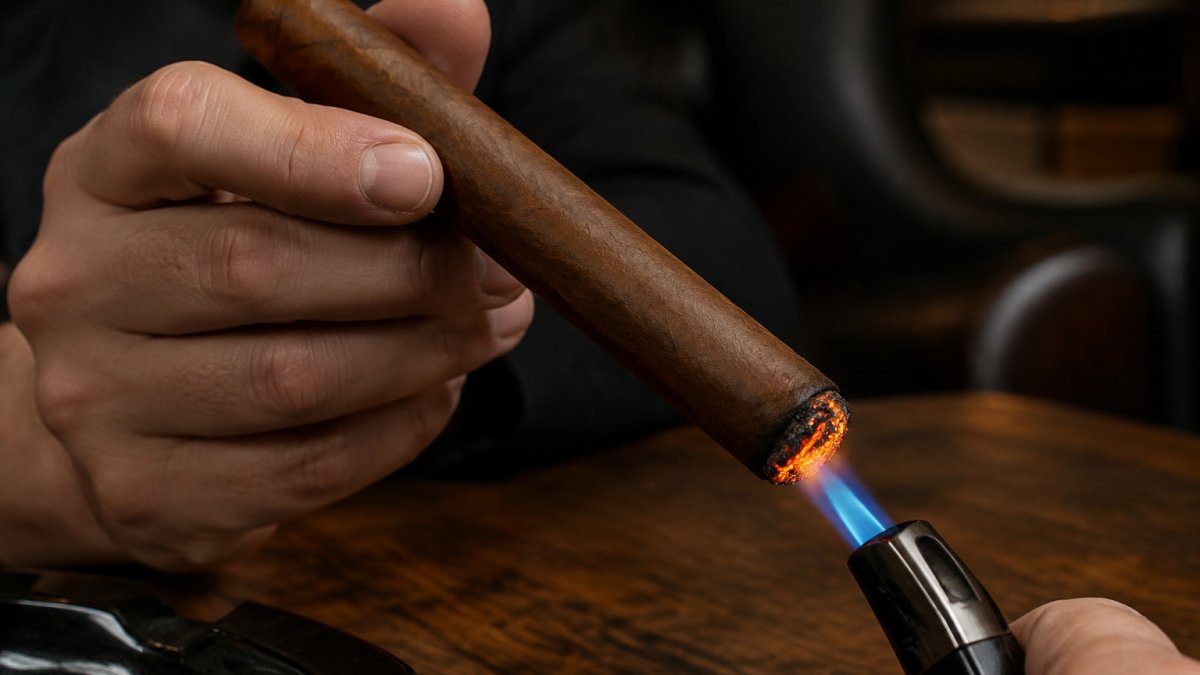
Hold the cigar a little above the flame and rotate it slowly. Keep the tip of the foot about an inch from the flame, not in it, and turn the cigar as you go. Stop when the foot turns a warm, even orange.
A common mistake is toasting for too long. If the foot blackens or smells sharp, you have gone too far, and the flavor will suffer. Use a gentle, steady pace instead of rushing the process.
- Hold the foot about an inch from the flame
- Rotate slowly so every side gets heat
- Stop when the whole foot glows orange
- Avoid blackening or scorching the tobacco
How to Light a Cigar With a Match or Lighter
Once the foot is toasted, bring the cigar to the flame and draw gently. Do not hold the cigar directly in the flame. Keep it close, but let the heat do the work.
Puff slowly and rotate the cigar as you draw. This spreads the lit area around the foot so the burn moves evenly across the face instead of creeping up one side.
If you use a wooden match, let the sulfur burn off first so the smoke does not taste harsh. A cedar spill works well for this too, since it lights cleanly and leaves little residue.
Watch out: A torch lighter with a hot, fast flame can scorch the wrapper and leave a bitter taste. A soft flame gives you far more control.
Holding the Flame at the Right Distance
Distance is where most uneven burns begin. The flame should touch the foot only lightly, if at all, while you draw.
Think of it like toasting a marshmallow over a campfire. That balance gives the foot enough heat without charring it.
Keep the cigar at a slight angle and move it in a small circle as you light. Check the glow after a few draws, and adjust your distance if one side lights faster than the rest.
How to Get an Even Burn on a Cigar
An even burn means the burn line advances in a straight, level ring around the cigar rather than climbing one side or racing down the middle.
The pre-draw visual check. Hold the lit foot at eye level in good light and look straight at the face. What you do not want to see:
- A dark, unlit crescent on one edge, that side never caught and will lag for the rest of the smoke
- A bright core with dull edges, the center is lit but the wrapper ring is not, which is the setup for tunneling
- One side glowing noticeably hotter or whiter than the rest, that side will race ahead and produce canoeing
- Black, crusty patches, the tobacco was scorched rather than toasted, and the flavor will turn bitter within the first inch
If any of those appear, fix it now. Rotate the underlit side toward the flame, hold it slightly closer for a few seconds, and take one or two short puffs until the ember line evens out.
Match the remedy to the cause. Most smokers treat every uneven burn the same way, which is why the problem keeps returning. Separate the causes:
- Lighting error, a dark patch at the foot from the start. Remedy: re-toast the cool side before drawing again.
- Construction, a visible soft spot or a hard knot under the wrapper, or a plug that makes one side draw tighter. Remedy: rotate the cigar so the soft side faces up; a firm roll between the fingers can sometimes open a tight spot, but a badly bunched cigar will keep canoeing no matter how you light it.
- Humidity, - Wind, outdoor air pushes the ember to the sheltered side. Remedy: turn your body so the lit face is downwind, or cup the foot with your hand while drawing.
- Smoking pace, puffing hard pulls heat down the center and causes tunneling; long gaps let one side cool and stall. Remedy: one gentle draw every 30 to 60 seconds keeps the ember line moving evenly.
Reading the burn line as you smoke. Once you are past the first inch, check the ring every few puffs. A slight wave is normal and self-corrects.
Watch out: if the same cigar canoes twice after a clean light, the problem is almost always the cigar's construction or moisture, not your technique, stop fighting it and set it aside rather than scorching the wrapper trying to force an even burn.
The article lists the most common causes of an uneven burn and how to fix each one.
| Problem | Cause | Fix |
|---|---|---|
| Dark, unlit crescent on one edge | Side never caught the flame | Rotate that side toward the flame and take short puffs |
| Bright core, dull edges | Center lit but wrapper ring not | Hold the flame closer to the edges and rotate slowly |
| One side glowing hotter | That side races ahead | Rotate the slow side up and give it extra seconds |
| Black, crusty patches | Tobacco scorched, not toasted | Re-toast gently; avoid direct flame on wrapper |
| Cigar canoes twice | Construction or moisture | Set the cigar aside instead of forcing it |
| Burn line uneven in wind | Wind pushes ember to one side | Turn the lit face downwind and cup the foot |
| Uneven burn from smoking pace | Hard puffs or long gaps | Take one gentle draw every 30 to 60 seconds |
How to Relight a Cigar Without Damaging It
A relight is not the same as a fresh light, and treating it that way is what produces the harsh, ashy taste people blame on the cigar. The goal is to bring the ember back to an even ring without scorching the wrapper or overheating the tobacco behind it.
First, decide whether it needs relighting at all. A cigar that has been down for a minute or two often has a live ember under the ash. Gently blow across the foot, if you see a dull orange glow spread, take one or two soft puffs and it will usually come back on its own. Relighting a cigar that was still lit is the most common cause of a bitter restart.
The cold-relight sequence. If the cigar has been out for more than a few minutes:
- Tap the ash off gently against the ashtray, do not grind it, which can crack the wrapper.
- Blow through the cigar from the head end to push out stale smoke sitting in the barrel; this is the step that removes most of the acrid taste.
- Hold the flame near the burn line, not buried in the foot, and rotate slowly while drawing in short, soft puffs until the ember ring is complete.
- Let the cigar rest for a few seconds, then take one normal draw to confirm an even light before settling back into your pace.
If the cigar went out long enough for the ash to go cold and crusty, re-toast the edge first, hold it above the flame and rotate until the foot glows evenly, then proceed with the relight. Skipping the re-toast is why many relights taste charred.
Relighting outdoors and in wind. Wind is the main reason cigars go out and the main reason relights go wrong, because a gust pushes the flame onto one side of the wrapper. Practical adjustments:
- Turn so the lit face of the cigar is downwind, using your body as a shield.
- Cup the foot loosely with your free hand while you draw; leave a small gap so heat and smoke can escape rather than collecting against the wrapper.
- Use a soft flame outdoors if you can shelter it; a torch is easier to keep lit in wind but its concentrated heat will scorch a wrapper fast if the flame touches it.
- Relight with shorter, gentler draws than you would indoors, long draws in wind pull hot air down one side and set up a canoe.
When to stop relighting. A cigar that has gone out three or four times, or that tastes sharply bitter and ashy even after a clean relight, is usually past saving, over-humid tobacco, a tight roll, or a long gap in smoking will keep putting it out. Relighting repeatedly only adds scorched flavor.
Watch out: never hold a torch flame directly against the wrapper to force a relight, the wrapper leaf burns far faster than the filler and will crack and tunnel before the center catches.
Booking a Padilla Cigar Tasting Box for Your Next Session
Practicing these techniques is easiest with a cigar that burns well from the start.
Before you buy, check the Padilla Cigar Company website for current prices and shipping details, including free shipping on U.S. orders over $100.
Once you have a few sessions under your belt, you will start to notice the difference a good light makes. For more, see our guide on how to tell if cigars are fresh before you light up.
Frequently Asked Questions
How do you light a premium cigar evenly?
Toast the foot first by holding it a short distance above the flame and rotating slowly until the entire edge glows orange. Then draw gently while keeping the flame just above the foot, not touching the tobacco. Rotate the cigar as you puff so heat spreads across the whole foot. Checking that the glow covers the full circumference before your first real draw is the single most useful habit for an even burn. Use a butane or soft-flame lighter, since a torch can scorch the wrapper and cause an uneven start.
What is the correct way to toast a cigar before lighting it?
Hold the cigar foot a short distance above the flame, roughly half an inch, and rotate it slowly. Stop when the whole foot turns a steady orange glow. Toasting dries the wrapper and prepares the foot to catch evenly, which helps prevent a lopsided burn. Do not hold the foot directly in the flame, because scorched tobacco can taste harsh and burn unevenly. Once the foot is glowing evenly, move directly into your first gentle draw.
Which end of a cigar do you light?
You light the foot, which is the open end opposite the cap. The cap is the rounded head you cut off before smoking. Cutting the cap removes the closed end so air can pass through. After cutting, toast and light the foot, not the cap. Lighting the cap would prevent proper draw and likely cause the cigar to burn poorly from the start.
How do you fix an uneven burn on a cigar?
Stop smoking and let the cigar rest for a moment. Then puff gently while rotating it slowly so the faster-burning side catches up. Avoid aggressive puffing, which pulls heat toward one side and widens the gap. If the uneven section is minor, a slow rotation usually corrects it. For a larger problem, a light touch-up with a gentle flame on the lagging edge can help, but keep the flame away from the wrapper and never scorch the tobacco.
