


Last Updated: October 31, 2026
Quick Summary
Knowing how to tell if cigars are fresh comes down to three quick checks: look, feel, and smell. A fresh cigar has an even wrapper, feels firm but springy, and carries a clean tobacco aroma. Check all three signals, because a cigar can look flawless and still be ruined.
- A healthy wrapper shows a smooth, slightly oily sheen rather than a dull, papery texture.
- A fresh cigar feels firm with slight give and gives only a faint crackle when squeezed.
- A stale, dusty, or ammonia-like cold draw means the cigar is past its best.
- Plume wipes off cleanly and is harmless, while fuzzy patchy mold on the foot means discard.
- Pinhead-sized holes and fine tobacco dust signal tobacco beetles, which thrive above roughly 72°F.
Table of Contents
- How to Tell If Cigars Are Fresh: The Step-by-Step Inspection Before You Light Up
- Signs of a Dry Cigar: What Visual and Tactile Clues Reveal
- Cigar Mold vs Plume: How to Tell Contamination from Oils
- How Long Cigars Last Outside a Humidor: Time Limits and Recovery
- How to Rehydrate Dry Cigars Without Ruining the Wrapper
- Freshness vs Age: When a Cigar Is Ready to Smoke
- Ordering with Confidence: What Fresh Cigars Should Arrive Like
- Frequently Asked Questions
How to Tell If Cigars Are Fresh: The Step-by-Step Inspection Before You Light Up
Knowing how to tell if cigars are fresh comes down to three quick checks: look, feel, and smell. A fresh cigar has an even wrapper, feels firm but springy, and carries a clean tobacco aroma. Padilla Cigar Company has spent 21 years crafting handcrafted cigars, and the five-minute inspection below catches many common problems before you cut and light.
Here is the uncomfortable truth most guides skip: a cigar can look flawless and still be ruined. Wrapper damage hides at the foot. Dryness hides under a smooth surface. You have to check all three signals, not just one.
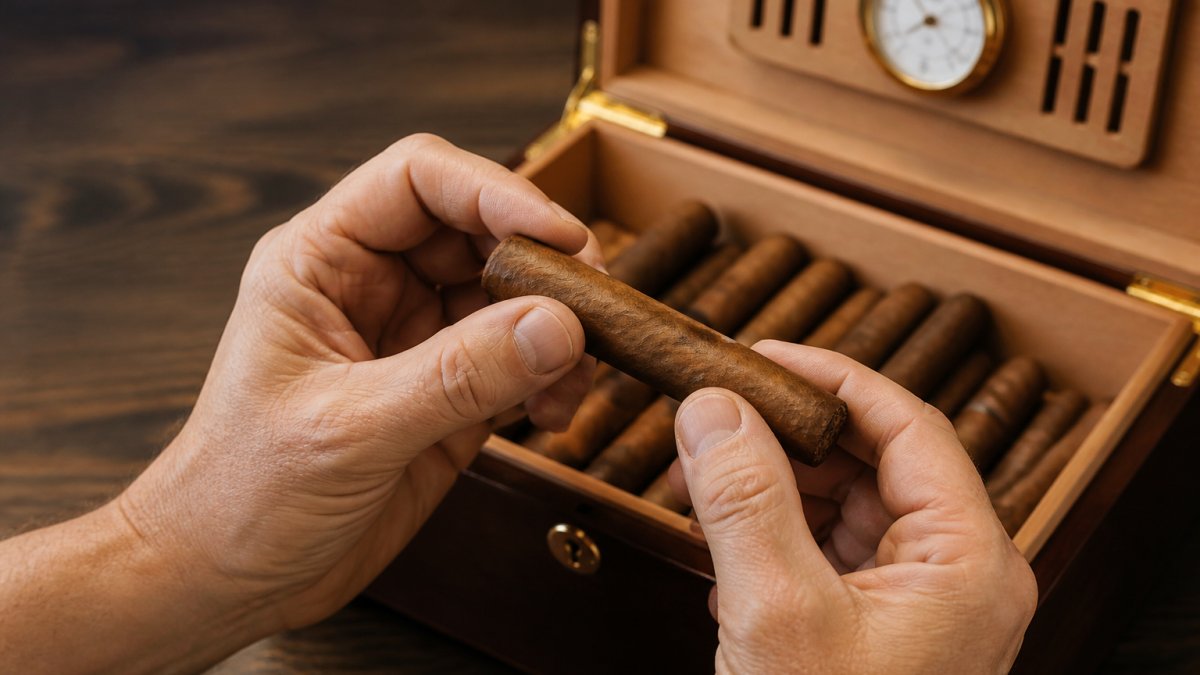
Step 1: Look at the Wrapper and Foot
Start with your eyes. Hold the cigar under good light and rotate it slowly.
- Wrapper: Look for a smooth, slightly oily sheen. Dull, papery texture is a warning sign.
- Cracks and splits: Fine lines near the head or foot mean the wrapper has dried and pulled apart.
- The foot: Check the exposed tobacco at the lighting end for loose flakes or a crumbly edge.
A healthy wrapper should look like tight, even skin. A dry one looks like old paint starting to flake.
Step 2: Feel for Firmness and Listen for the Crackle
Roll the cigar gently between your fingers. It should feel firm with a slight give, like a ripe peach, not hard as a pencil.
Then squeeze it softly near your ear. A faint crackling sound is normal.
Watch out: A spongy, soft cigar is the opposite problem. It has absorbed too much humidity and will likely burn unevenly or draw poorly.
Step 3: Smell the Cold Draw and Check the Burn
Snip the cap and take a cold draw before lighting. You want a clean tobacco taste with a touch of sweetness. A stale, dusty, or ammonia-like note means the cigar is past its best.
If you do light it, watch the burn. A fresh cigar generally burns evenly and holds its ash.
Signs of a Dry Cigar: What Visual and Tactile Clues Reveal
Dryness shows up first in texture. The wrapper loses its sheen and starts to feel like thin paper. Press a fingernail gently into the surface and a dry cigar will not spring back.
Other signs of a dry cigar include:
- A dull, matte finish instead of a light oil sheen
- Visible cracks or splits along the wrapper
- A loose, crumbly foot that sheds tobacco
- A brittle feel and loud crackling when squeezed
Dry cigars also burn too hot and too fast. The smoke turns sharp and bitter because the tobacco oils that carry flavor have evaporated.
Cigar Mold vs Plume: How to Tell Contamination from Oils
Two contaminants get confused more than any others: mold and plume. A third, tobacco beetles, is the one that actually ruins a humidor. Learn to separate all three before you light anything.
Plume (Bloom): Harmless Crystallized Oils
Plume is a fine, powdery white dusting that looks like confectioner's sugar sitting on the wrapper. It is crystallized tobacco oils that have migrated to the surface during aging. Plume:
- Wipes off cleanly with a soft cloth or your fingertip
- Sits on the surface only, it does not grow into the foot or under the wrapper
- Is uniform and thin, not patchy
- Smells like clean tobacco, sometimes slightly sweet
Plume is generally a sign of well-aged tobacco rather than spoilage.
Mold: Fuzzy, Spreading, and Not Safe
Mold is a living growth. It looks fuzzy or hairy, not powdery, and it spreads in irregular patches. Color ranges from white to green to blue-black. Mold:
- Smears or stains when you wipe it, it does not brush away cleanly
- Often appears inside the foot or under the wrapper, not just on the surface
- Grows in patches that enlarge over days
- Smells musty, damp, or like a basement
| Feature | Plume | Mold |
|---|---|---|
| Texture | Powdery, dusty | Fuzzy, hairy |
| Color | White, even | White, green, or blue-black |
| Pattern | Thin, uniform dusting | Patchy, spreading spots |
| On the foot | Rarely | Often grows inside |
| Wipes off | Yes, cleanly | Smears or leaves a stain |
| Smell | Clean tobacco | Musty, damp |
Tobacco Beetles: The Contamination That Spreads
Tobacco beetles are small, brown insects that lay eggs inside cigar tobacco. The larvae eat through the leaf, leaving perfectly round pinhead-sized holes in the wrapper and filler. Signs include:
- Small, round holes, roughly the size of a pinhead, in the wrapper or foot
- Fine tobacco dust (frass) at the bottom of the humidor
- Actual beetles visible when you tap the cigar over a white surface
Beetles thrive above roughly 72°F and can spread through an entire humidor in weeks. If you find beetle holes, freeze the affected cigars using a controlled freeze cycle (many collectors use a multi-day freeze, thaw, and refreeze routine) or discard them, then clean and recalibrate the humidor. Do not put an infested cigar back in with healthy stock.
The Stop/Go Decision
- Plume only: brush off, smoke.
- Surface mold on wrapper only: wipe, inspect the foot, and if the foot is clean, smoke soon, do not age it.
- Mold on foot or filler: discard.
- Beetle holes or frass: isolate, freeze or discard, clean the humidor.
When in doubt, throw it out. A single contaminated cigar is not worth the rest of your collection.
How Long Cigars Last Outside a Humidor: Time Limits and Recovery
A cigar left out of a humidor generally begins losing moisture within hours, and the rate depends on the surrounding humidity.
If you want to keep cigars properly at home, our guide on how to properly store premium cigars at home walks through the setup step by step.
How to Rehydrate Dry Cigars Without Ruining the Wrapper
Rehydration is generally best done slowly, since a wrapper can stretch and split if moisture is added too quickly. To understand how humidity affects premium cigars, read Do Premium Cigars Really Need Consistent Humidity?.
First, Measure Instead of Guessing
Before you rehydrate anything, verify your humidor's actual relative humidity with a calibrated hygrometer. Most digital hygrometers ship reading a few points off; calibrate with a salt test (a small dish of damp salt in a sealed bag for 24 hours should read 75% RH) and adjust or note the offset. Target a stable 65-70% RH for most non-Cuban cigars.
Stage Recovery by Severity
- Mild (hours out, still slightly springy): Return to the humidor at 65-70% RH. Check firmness in 3-5 days. Most mild cases recover fully.
- Moderate (1-3 days out, dull wrapper, faint crackle): Place in the humidor at 65-70% RH and leave the lid closed for 1-2 weeks. Do not open it daily, every opening drops humidity.
- Severe (a week or more, brittle, visible cracks): Use a staged approach. Start in a container at roughly 60-62% RH for the first week, then step up to 65-70% over the following two to four weeks. Rapid jumps from bone-dry to 70% are what crack wrappers.
- Ruined (weeks to months out, crumbly foot, wrapper flaking): Recovery is unlikely. The oils that carry flavor have evaporated, and the wrapper will likely split on lighting. Smoke it only if you accept a harsh, hot burn; otherwise discard.
The Mechanics of a Safe Rehydration
- Calibrate your hygrometer and confirm the humidor holds a stable reading.
- Place dry cigars in the humidor and keep the lid closed.
- Do not mist cigars, wipe them with a damp cloth, or set them near a water source, that invites mold and uneven burns.
- Check firmness at the intervals above with a gentle squeeze, not a hard press.
- Test one cigar before smoking the rest. If it draws tight or the wrapper cracks when cut, give the batch more time.
Freshness vs Age: When a Cigar Is Ready to Smoke
Freshness and age are not the same thing. A fresh cigar is properly humidified and ready to smoke.
Many smokers find that a little rest improves a cigar. The harsh edges soften and the aroma deepens. But age only helps a cigar that was stored well.
So the question is not "how old is it" but "was it kept right." A well-stored cigar from last year can smoke better than a fresh one that sat in a dry drawer.
Ordering with Confidence: What Fresh Cigars Should Arrive Like
A fresh cigar should arrive firm, springy, and clean-smelling, with an intact wrapper. If it shows up brittle, cracked, or spongy, something went wrong in storage or shipping.
When you order online, ask how the shop stores and ships its stock. If you have questions about an order, visit the contact page.
Padilla cigars are handcrafted and shipped direct from the factory, and free shipping applies to U.S. orders over $100.
Frequently Asked Questions
How can you tell if a cigar is too dry or too moist?
A dry cigar feels brittle, crackles when squeezed, and may show a flaky wrapper. A too-moist cigar feels spongy, resists a gentle squeeze, and often burns unevenly or goes out. The middle ground is a firm cigar with a slight give, like a well-packed leather cushion. For a more objective check, use a hygrometer in your humidor and aim for 65-70% relative humidity at roughly 70°F. If you buy online, ask the retailer how they store and ship their stock, since a cigar that arrives spongy may have been overhumidified in transit.
Can a dry cigar be saved, or is it ruined?
A mildly dry cigar can often be rehydrated, but a severely dried one is usually ruined. If the wrapper is cracked, the filler is crunchy, or the cigar crumbles when handled, the oils and sugars are gone and flavor will be harsh.
What does mold on a cigar look like, and how is it different from plume?
Mold appears as white, green, or blue fuzzy patches that can be wiped off, often in spots or along the seams. Plume, sometimes called bloom, is a fine white powder that looks like dust and is a sign of oils rising to the surface. Plume is rare and usually uniform; mold is patchy and may have a musty smell. If you see blue-green fuzz, separate the cigar from others and inspect the humidor. Mold can spread through spores, so clean the humidor with a mild solution and replace any cedar liners if the growth is widespread.
How long can a cigar sit out before it dries out?
A cigar left in open air can begin to dry over time, and the rate depends on the surrounding humidity. For longer periods away from the humidor, storage in a sealed container with humidification is generally recommended.
Fresh cigars reward a careful buyer. Check the wrapper, feel the firmness, trust your nose, and store them right. If you want handcrafted cigars shipped fresh and backed by more than two decades of experience, get started with Padilla Cigar Company and taste the difference proper freshness makes.

The freshest cigars come straight from the source. Our factory bundles ship direct — the Habano and Maduro 25-counts are good places to start.