


Last Updated: November 14, 2026
Quick Summary
To compare cigar brands, first match the vitola, length and ring gauge so you are comparing like with like. Then change one layer at a time across wrapper, binder and filler, and score flavor, draw, burn, construction and finish on the same scale. Judge value by price per cigar within a matched format.
- Confirm vitola, length and ring gauge before comparing any two cigars.
- A 52 ring gauge is thicker than a 38 and usually burns longer.
- A $49.99 ten-pack works out to $5.00 per cigar.
- Score flavor, draw, burn, construction and finish on a 1-to-5 scale.
- Record notes at the first third, midpoint and final third of each cigar.
Table of Contents
- Step 1: Start With Size, Shape and Cigar Names
- Step 2: Compare Wrapper, Binder and Filler
- Step 3: Match Strength and Body to Your Taste
- How to Compare Cigar Brands Online
- Types of Cigar Flavors and How to Taste Them
- How Beginners Should Compare Cigar Brands
- Pick Your First Padilla Box and Start Your Comparison
- Frequently Asked Questions
Most smokers judge a cigar by its wrapper color or its brand name, and that habit costs them money. A dark leaf can taste milder than a pale one, and two brands with similar reputations can differ sharply in size, strength and construction. The cigars people enjoy most are often the ones they compared carefully, not the ones that looked impressive on the shelf.
Comparing cigar brands online is harder than it looks. Product listings often highlight a rating or a single flavor note, while leaving out the details that determine how a cigar actually smokes. Describing a cigar by both size and shape is a sensible starting point, because two cigars with the same name can differ in both. A fair comparison starts there.
Step 1: Start With Size, Shape and Cigar Names
Before you compare taste, confirm that you are comparing like with like. Note the vitola (the size and shape name), the length and the ring gauge for each cigar. A 6x52 toro and a 7x38 lancero will burn differently and deliver different amounts of tobacco, even from the same blend.
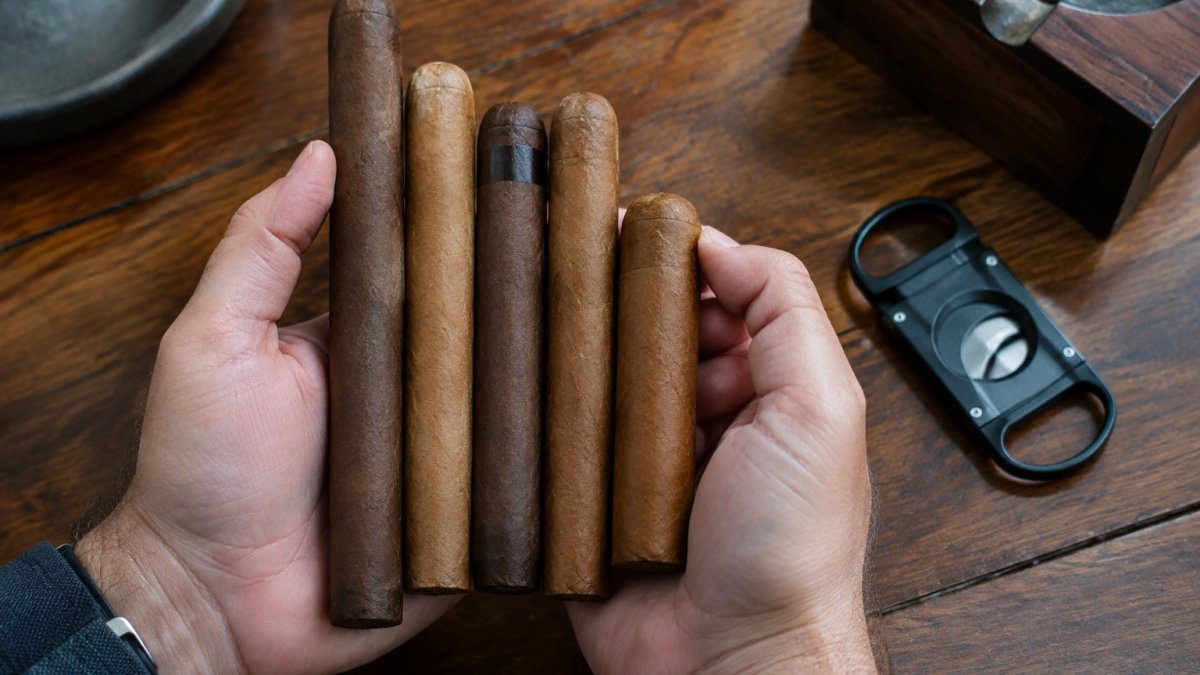
Read the full product name, too. Check the specifications for each cigar before you set two cigars against each other.
Reading Ring Gauge and Length
Length is the distance from the cap to the foot. Ring gauge is the diameter, measured in 64ths of an inch. A 52 ring gauge is thicker than a 38, which usually means a fuller smoke and a longer burn. When two cigars share a blend but differ in gauge, expect the thicker one to deliver more flavor per draw and to take longer to finish.
Use the same measurements for every cigar in your comparison. Mixing sizes is the most common reason side-by-side tasting feels inconsistent.
The article's key specifications for matching cigars side by side are summarised below.
| Measure | What it means | Example from the article |
|---|---|---|
| Length | Distance from cap to foot | 6 in. toro vs. 7 in. lancero |
| Ring gauge | Diameter in 64ths of an inch | 52 is thicker than 38 |
| Vitola | Size and shape name | Toro, lancero |
| Price per cigar | Pack price divided by count | $49.99 ten-pack = $5.00 each |
Step 2: Compare Wrapper, Binder and Filler
Every cigar has three tobacco layers. The wrapper is the outer leaf and shapes most of the first impression, including appearance and much of the early flavor. The binder holds the filler together. The filler, usually a blend of long-leaf tobaccos, delivers most of the body and strength.
To compare two cigars fairly, change one layer at a time. The Maduro vs. Maduro ten-pack is one example: its two toros share a dark, rich idea, but the product description says one changes the binder and a key filler component.
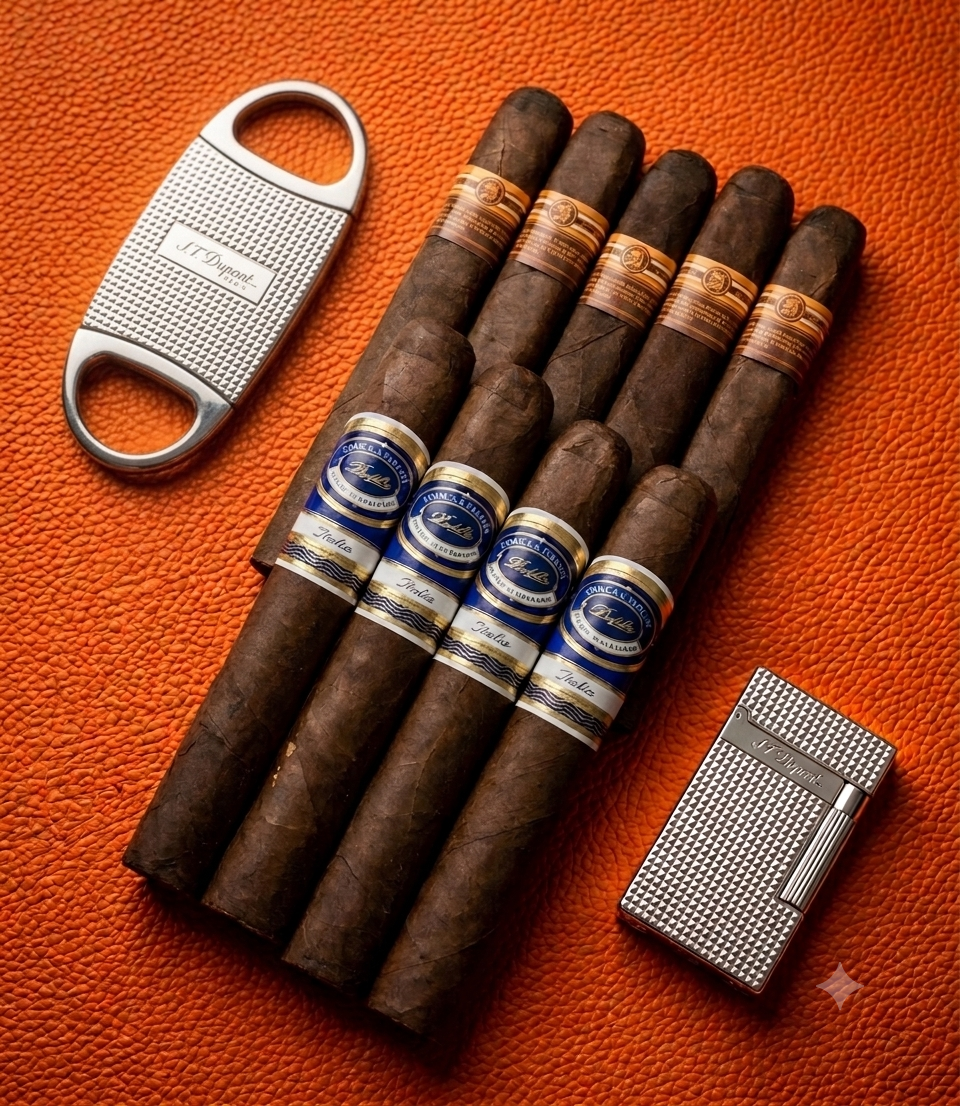
Note what each layer contributes. Write down the wrapper origin, the binder and the filler countries of origin where listed, and the flavor notes you detect on the first third, middle and final third of the cigar.
Step 3: Match Strength and Body to Your Taste
Strength describes how much nicotine and intensity a cigar delivers. Body describes how heavy it feels in the mouth. The two are related but not identical: a cigar can taste full without being strong, and the reverse is also true.
Start with milder options and move up. The Casa de Padilla Connecticut Bundle, listed with a milder medium body, is one option to consider. Rank your comparisons by body on a simple scale from 1 to 5 so you can see your preferences emerge over several sessions.
How to Compare Cigar Brands Online
Online shopping lets you compare brands quickly, but only if you read the same fields for each product and understand what the listings do and do not tell you. A fair online comparison has three parts: matching equivalent cigars, interpreting ratings correctly, and weighing value beyond the sticker price.
Match Equivalent Cigars Before You Compare Price
Price per cigar is the figure that matters when pack sizes differ. A ten-pack at $49.99 works out to $5.00 per cigar, while a five-pack at $49.99 costs $10.00 each. But price per cigar is only fair if the cigars are equivalent in size and format.
When you compare two brands online, line up the vitola, length, and ring gauge first, then compare price per cigar within that matched format. If a brand only offers the blend in a larger ring gauge, note that the comparison is not like-for-like and adjust your expectations for burn time and flavor intensity.
Interpret Ratings and Their Limits
Published ratings are a shortlisting tool, not a verdict. Rating scales often run to 100 points, and scores can cluster tightly at the top, so a small difference may reflect reviewer preference more than a meaningful quality gap. Ratings also reflect the reviewer's palate and criteria, not yours. A high score on a full-bodied maduro tells you little if you prefer milder Connecticut wrappers.
Use ratings to narrow a list to three or four candidates, then confirm the fit yourself with the tasting worksheet above. Treat a single score as one input among several, and be skeptical of listings that highlight a rating while omitting wrapper, binder, filler, and size, the details that actually predict whether you will enjoy the smoke.
Weigh Value Beyond Sticker Price
Sticker price is the easiest number to compare and the least complete. A fuller picture includes:
- Cost per smoke: price per cigar divided by the realistic number of sessions, accounting for the fact that a larger ring gauge often lasts longer.
- Consistency: whether the brand's construction and draw hold up across multiple cigars, not just the one that was rated.
- Availability: whether you can reorder the same vitola reliably, since a blend you love but cannot restock is a poor long-term value.
- Condition on arrival: whether the seller ships with adequate humidity control, since a dried-out cigar smokes hot and tastes harsh regardless of brand.
A brand that costs a little more per cigar but delivers consistent construction and reliable restocking is often the better value than a cheaper brand you have to gamble on each order.
Types of Cigar Flavors and How to Taste Them
Flavor descriptions such as cedar, espresso, cocoa or roasted nuts are a shared vocabulary, but vocabulary alone will not help you compare brands. For a deeper beginner-friendly breakdown, see how flavor profiles are identified. What separates a useful comparison from a vague impression is a repeatable tasting method: same conditions, same pace, same scoring fields, and a written record you can revisit weeks later.
Set the Conditions Before You Light Up
Taste is easily skewed by what came before it. Comparing cigars under matched conditions, such as a clean palate, no strong food beforehand, a similar time of day and the same draw pace, gives a fairer read. If you smoke one cigar quickly and the next slowly, the faster one will taste hotter and harsher regardless of brand.
Keep the cut and light consistent, too. A straight cut versus a punch cut changes draw resistance, and an uneven light scorches one side of the filler.
Score Five Dimensions, Not Just Flavor
Published tasting notes usually emphasize flavor, but flavor is only one of five dimensions that determine whether you will actually enjoy a cigar. Build a simple worksheet with a 1-to-5 score for each:
- Flavor: the specific notes you detect and whether they evolve across thirds.
- Draw: resistance on the puff, too tight, too loose, or just right.
- Burn: evenness of the burn line and whether it needs touch-ups.
- Construction: firmness of the roll, cap integrity, and whether the ash holds.
- Finish: how long the flavor lingers after the puff and whether it turns bitter or clean.
A cigar that scores high on flavor but low on draw and burn is not a better cigar than one that scores moderately on flavor but high on construction. The rubric forces you to weigh both.
Track the Three Thirds
Many cigars change character as they burn, so record notes at the first third, the midpoint, and the final third. A brand that opens with pepper and settles into cocoa is a different experience from one that stays flat throughout. Note where the transition happens and whether the final third turns harsh, a common sign of rushed smoking or a cigar that needs more rest.
A Practical Contrast Pairing
If you want a structured starting point, try the Padilla Miami Maduro 10-pack alongside a lighter Connecticut blend. The contrast between dark espresso-driven notes and creamy, mild notes makes the differences easy to name, and the worksheet lets you see whether the gap is in flavor, construction, or both. Score each cigar on the same five dimensions and compare the totals side by side rather than relying on memory.
Watch out: tasting two cigars back-to-back without a palate reset (water and a few minutes) will make the second cigar taste muted, which is a tasting error, not a brand difference.
How Beginners Should Compare Cigar Brands
Beginners often compare too many cigars at once and lose track of what they noticed. For guidance on choosing a first premium cigar, start with the basics before comparing brands. Start with two or three options that differ in one clear way, such as wrapper or body. Smoke each one at the same time of day, and rate it on flavor, smoothness and balance.
Buying a sampler is an efficient way to do this. Our Padilla Grand Tour gives you ten distinct blends for $69.95, which lets you compare several shapes and wrappers without buying full boxes of each.
Pick Your First Padilla Box and Start Your Comparison
Once you have a shortlist, choose a box that lets you test your conclusions. The Padilla Maduro Masters 20 includes four maduro blends, five of each, for $99.99. Smoke them side by side, note what separates your favorites, and return to the method above when you are ready to compare the next brand.
Frequently Asked Questions
How can beginners compare cigar brands?
Start with one variable at a time. Pick two or three cigars of similar size and shape, then compare wrapper, strength and flavor in a single sitting. Keep notes on each draw, the burn and the finish. Price matters too: the Padilla Grand Tour, a ten-cigar sampler, lets you taste ten blends for $69.95, which makes side-by-side comparison far easier than buying single sticks of unfamiliar brands.
How do you compare cigar brands online?
Check the listed size (length and ring gauge), wrapper, binder, filler, strength and price on each product page, and put equivalent cigars side by side. Compare cost per cigar, not just box price. For example, the Padilla Maduro Masters 20 costs $99.99 for twenty cigars, about $5 each, while the Maduro and Corojo Ten is listed at $49.99 for ten. Expert ratings are one input only and should not replace a direct comparison of the specifications.
What cigar size and shape should I compare first?
Compare cigars of the same shape and similar ring gauge before judging anything else. A robusto and a lancero taste different even from the same blend, because size changes how the tobacco burns and how much flavor reaches the palate. Padilla lists sizes such as 6 x 52 for its Miami Toro and 7 x 38 for its Dark Corojo Lancero, so matching those numbers gives you a fair comparison.
What types of cigar flavors should I look for?
Most cigars fall into a few flavor families: earthy and peppery Corojo blends, sweeter Connecticut-wrapped cigars with cream and toasted almond notes, and rich maduros with dark chocolate, espresso and roasted coffee. Taste one cigar from each family in a single session, noting which notes appear first and how the finish lingers. Padilla's Maduro and Corojo Ten pairs these two families so you can judge them directly.
