


Last Updated: November 4, 2026
Quick Summary
Aged tobacco matters for flavor because time changes the leaf's internal chemistry: harsh compounds fade, natural sugars concentrate, and separate tobacco flavors learn to sit together instead of fighting. That quiet chemistry is why a well-rested cigar often tastes rounder, sweeter, and smoother than the same blend smoked fresh.
- Fresh leaf holds ammonia and other volatile compounds that dissipate slowly in a stable humidor.
- Residual enzymatic activity converts starches into simpler sugars, peaking in the first one to two years.
- Target roughly 65-70% relative humidity for aging; higher risks mold and lower dries the leaf.
- Mild Connecticut and mild blends need only 3-12 months, while full-bodied maduro rewards 3-5+ years.
- Bloom is flat and powdery, while mold is raised and fuzzy, so judge by texture, not color alone.
Table of Contents
- Why Aged Tobacco Matters for Flavor
- How Aging Changes Tobacco Flavor
- How Long to Age Cigars: Timelines by Type and Format
- Cigar Aging vs Resting: What's the Difference?
- How to Age Cigars at Home: A Step-by-Step Protocol
- When Aging Does Not Improve Flavor
- How to Tell Whether Tobacco Aged Well or Spoiled
- Choosing Cigars Worth Aging
- Frequently Asked Questions
Why Aged Tobacco Matters for Flavor
Aged tobacco matters for flavor because time changes the leaf's internal chemistry: harsh compounds fade, natural sugars concentrate, and separate tobacco flavors learn to sit together instead of fighting. That quiet chemistry is why a well-rested cigar often tastes rounder, sweeter, and smoother than the same blend smoked fresh.
Cigar aging is the practice of storing finished, rolled cigars in stable, controlled conditions so their flavor develops over months or years. It is different from leaf fermentation, which happens before rolling.
How Aging Changes Tobacco Flavor
Time alters tobacco flavor through slow chemical and physical shifts, but the changes are not one uniform process.
1. Volatile loss and off-gassing. Fresh leaf holds ammonia and other volatile compounds left over from fermentation.
2. Residual enzymatic activity. Fermentation does not stop entirely when the leaf is cured and rolled.
3. Oxidation. Oxygen passing through the wrapper reacts with oils, tannins, and polyphenols in the leaf.
**4.
How Different Tobacco Types Respond
The size of the change depends heavily on the leaf. The following patterns are commonly observed:
- Nicaraguan and Dominican long filler. Oily, robust leaf with plenty of residual sugars and tannins. Rewards one to three years with better balance and a smoother finish.
- Connecticut shade and mild wrappers. Thin, low-oil leaf that changes quickly. Three to twelve months is often enough; longer storage risks muting the delicate flavor.
- Maduro and oily broadleaf. Dense, sugar-rich leaf that can absorb years of aging. Three to five years or more deepens richness and integrates spice.
- Burley. Low sugar and low oil, so it changes little with age. It often smokes well fresh and gains little from long storage.
- Aromatic pipe tobacco. Toppings and casings are volatile and fade rather than deepen. Aging usually costs flavor rather than building it.
- Latakia-heavy pipe blends. The smoky character can soften and even dull with extended storage, so many smokers prefer these younger.
Fermentation, Product Aging, and Post-Opening Aging
These three stages are often conflated, and separating them clarifies what home storage can and cannot do.
- Leaf fermentation happens before manufacture. Growers pile cured leaf and let heat and microbial activity break down ammonia, proteins, and harsh compounds. This is the biggest single reduction in harshness a tobacco ever gets, and it is finished before the leaf reaches the roller.
- Product aging is what happens to a finished cigar or tin in storage. It is slower and gentler than fermentation, working mainly on volatiles, residual enzymes, and moisture equilibration.
- Post-opening aging applies to pipe tobacco and tins once the seal is broken. Exposure to air accelerates oxidation and moisture loss, so an opened tin changes faster and less predictably than a sealed one.
Understanding which stage you are influencing keeps expectations realistic. Home storage cannot replicate fermentation, but it can deliver meaningful mellowing, sweetness, and harmonization over months to years.
How Long to Age Cigars: Timelines by Type and Format
There is no universal number, but practical ranges exist. Mild, thin-wrapped cigars change fast; heavy, oily blends reward patience. Use this as a starting guide, then taste as you go.
| Cigar Type | Suggested Aging Time | What to Expect |
|---|---|---|
| Mild Connecticut or mild blends | 3-12 months | Gentle mellowing, light sweetness |
| Medium Nicaraguan or Dominican blends | 1-3 years | Better balance, smoother finish |
| Full-bodied maduro and oily wrappers | 3-5+ years | Deep richness, integrated spice |
| Aromatic pipe tobacco | Little to none | Flavor may fade, not improve |
| Burley-heavy pipe blends | Minimal change | Often smokes well fresh |
Aromatics and burley-based pipe blends may change little with age, and some aromatic toppings simply fade, according to discussion on Pipe Smokers Forums on fresh versus aged tobacco. Taste is the only real test.
Cigar Aging vs Resting: What's the Difference?
Cigar aging and resting are the same physical process at different scales. Resting is short-term: days to a few weeks after shipping, letting a cigar recover from travel and settle to your humidor's humidity. Aging is long-term: months to years, aimed at real flavor development. Rest first, then decide whether a cigar deserves a long sleep in the cellar.
How to Age Cigars at Home: A Step-by-Step Protocol
Aging at home is simple if you control two variables: humidity and temperature. Follow this protocol and keep notes so you learn what works for your palate.
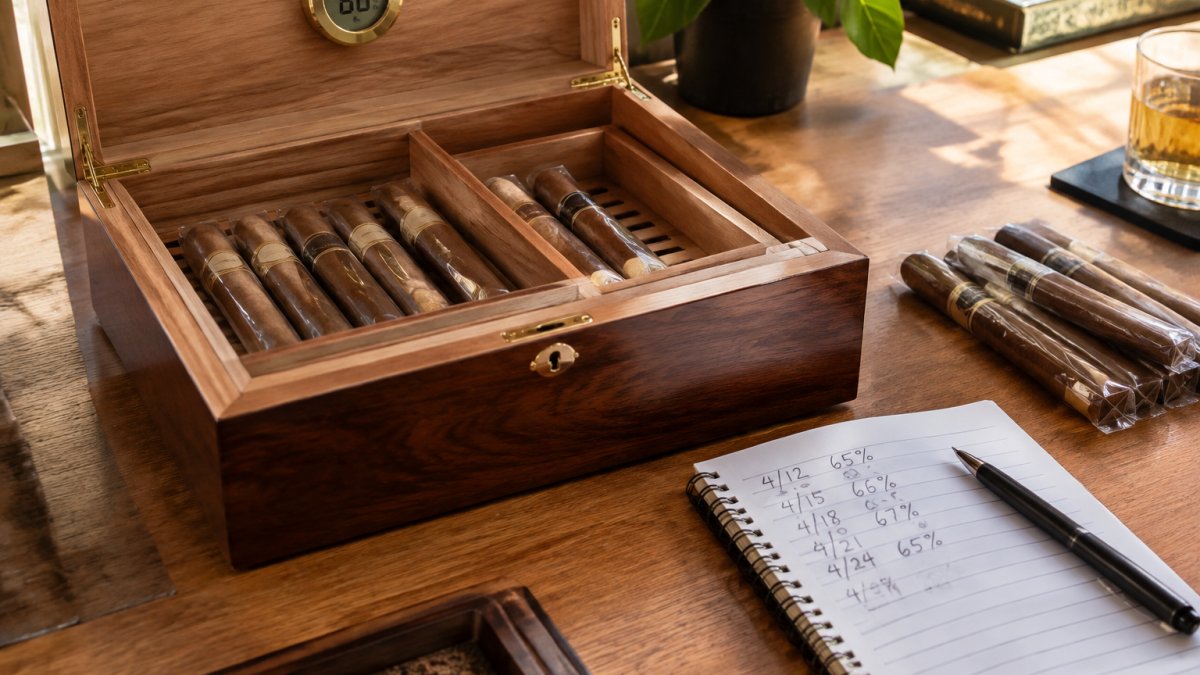
- Season the humidor. Wipe Spanish cedar with distilled water and let it stabilize for several days before adding cigars.
- Set humidity. Target roughly 65-70% relative humidity for aging. Higher risks mold; lower dries the leaf.
- Hold temperature steady. Keep the humidor in a cool, dark spot away from sun and vents.
- Load in single layers. Give cigars room to breathe; do not cram.
- Label and date. Note the blend, box date, and start date.
- Check monthly. Open briefly, inspect, and log readings.
Setting Up Your Aging Environment
Your environment decides whether aging helps or ruins the leaf. A dedicated humidor or wineador beats a makeshift box every time. For detailed setup steps, see our guide on how to properly store premium cigars at home. If you are unsure how tightly to control conditions, read whether premium cigars really need consistent humidity before you commit.
30 Miami-Made Padilla Cigars—Including Rare Aged Long Fillers—for Only $139.99 →
Rotation, Inspection, and Record-Keeping
Rotate cigars gently every few months so all sides see even humidity. Inspect for mold, cracking, or beetles, and remove any suspect stick at once. Keep a simple log: date, readings, and tasting notes. That record is how you learn your own aging timeline instead of guessing.
When Aging Does Not Improve Flavor
Aging is not a cure-all. Some blends peak early, and long storage can mute the very flavors you love. A little aging of one to two years can help meld flavors, but extended storage can dull Latakia's smokiness, according to a Pipes and Cigars post on aging. If a cigar tastes flat after a year, smoke it. Not every stick deserves a decade.
How to Tell Whether Tobacco Aged Well or Spoiled
Most guides list mold and dryness as warning signs but stop there. For a practical inspection guide to judging freshness and condition, see How to Tell If Cigars Are Fresh. A practical inspection separates three outcomes: healthy maturation, harmless surface bloom, and true spoilage. Work through the checks below in order before you light anything that has been stored for months.
Step 1: Smell Before You Look
Open the humidor or tin and let the air settle for a few seconds. Healthy aged tobacco smells of hay, dried fruit, cedar, leather, or baking spice, depending on the blend. Spoilage announces itself as a musty, sour, or ammonia-heavy odor that lingers. If the smell makes you pull back, treat that as a stop sign and inspect further.
Step 2: Inspect the Surface
Look at the wrapper and the foot of the cigar under good light.
- Healthy maturation. Slight color deepening, a faint oily sheen, and a dry, intact wrapper. A light dusting of white, crystalline bloom (often called plume) is harmless and can be brushed off.
- Mold. Fuzzy, raised patches in blue-green, gray, or black, often spreading in circular colonies. Mold can be surface-only or can penetrate the filler. If it is fuzzy and colored, assume it has reached the filler and discard the stick.
- Excessive dryness. A wrapper that cracks when gently squeezed, flakes at the foot, or feels brittle indicates the cigar has dropped well below target humidity. It may still be smokable but will burn hot and harsh.
Watch out: bloom and mold are easy to confuse in photos, so judge by texture, not color alone. Bloom is flat and powdery; mold is raised and fuzzy.
Step 3: Check for Pests
Tobacco beetles leave small, perfectly round holes in the wrapper and filler and produce a fine dust at the bottom of the humidor. If you see holes or dust, isolate the affected cigars immediately, inspect every stick in the container, and freeze suspect cigars using a home freeze protocol before returning them to storage.
Step 4: Feel and Listen
A properly aged cigar feels firm but gives slightly under gentle pressure, with no soft spots and no crunch. Roll it gently near your ear: a faint crackle is normal, but a loud, dry rustle suggests the leaf has dried out. Soft, spongy spots can indicate uneven moisture or internal mold.
Step 5: Test the Draw and the Burn
Cut and cold-draw a suspect cigar before lighting. A plugged, bitter, or sour cold draw is a reason to set it aside. When you do light it, a cigar that aged well burns evenly, holds a firm ash, and finishes clean. A spoiled cigar burns hot, tunnels, or leaves a lingering sour or musty aftertaste.
Safe Handling
Wash your hands before and after handling suspect tobacco. Do not smoke a cigar with visible mold, a musty smell, or a sour cold draw; the risk is not worth the stick. Isolate any spoiled tobacco from healthy stock, clean the humidor with distilled water and let it dry fully, and replace the Spanish cedar if mold has penetrated the wood.
Choosing Cigars Worth Aging
Start with cigars built to improve: oily wrappers, long filler, and balanced blends. Thin, mild sticks rarely reward patience. If you want a head start, our Padilla Vintage Reserve 3.0 pre-release 5-pack is built on aged Nicaraguan long fillers, so it already shows matured depth. For value, the 30 Miami-made Padilla cigars bundle includes rare long fillers aged over a year and a half. Both give you something worth cellaring, or smoking now.


Frequently Asked Questions
Is aged tobacco better?
Not always. Aged tobacco often tastes smoother and more integrated because harshness and ammonia fade over time, but the effect depends on the blend. Aromatic and burley-heavy pipe blends may change little, and long storage can mute the smokiness of Latakia. Full-bodied cigars with strong tannins usually gain the most. Try one cigar from a box at six months and another at eighteen months to judge the change for yourself.
How long should cigars be aged?
Aging timelines vary by blend. Mild Connecticut-shade cigars tend to change within a year, while full-bodied blends with Nicaraguan or maduro leaf can continue developing for years. Stable storage at a moderate relative humidity is the most important factor.
Does aging make tobacco smoother?
Yes, in most cases. During aging, oxidation and residual enzymatic activity break down starches into sugars and reduce ammonia compounds, which softens the tannic bite on the tongue and retrohale. The smoke tends to feel rounder and the finish cleaner. That said, aging cannot fix poor construction or leaf that was already flat. A cigar that starts thin and papery will usually stay thin, just less harsh.
Can I smoke one-year-old tobacco?
Absolutely. One year is a common and enjoyable age for many cigars, and some smokers prefer the brighter, punchier profile of a younger stick. The key is storage: a cigar kept at stable humidity for twelve months will smoke far better than one that swung between damp and dry. If you buy a box, smoke one now, then revisit at six and twelve months to see how the aged tobacco develops.
Aging rewards patience, but only when you start with the right leaf and store it well. Padilla Cigar Company has spent 21 years crafting award-winning, direct-from-the-factory cigars, chosen five times among the Top cigars in the world by Cigar Aficionado. Our aged long fillers and small-batch blends give you a head start on flavor, and free shipping applies on U.S. orders over $100. Get started with Padilla Cigar Company and taste what properly aged tobacco can do.
